Sep 2, 2026Buying Guides
Farm Vehicle: Types, Applications and Key Buying Considerations
Farm Vehicle: Types, Applications and Key Buying Considerations
Introduction
Farm vehicles are purpose‑built off‑road machines designed to complete daily agricultural tasks, covering land preparation, planting, crop transport, orchard management, livestock patrol and farm logistics. Different from ordinary road vehicles, they feature reinforced frames, heavy‑duty tires, high ground clearance and strong load‑bearing capacity to work on muddy, bumpy, sloped farmland conditions.Modern farming depends heavily on reliable farm vehicles to cut manual labor, shorten working cycles and lower overall operating costs. For farm owners, distributors and agricultural project contractors, selecting suitable farm vehicles directly influences long‑term operational efficiency.
Main Types of Farm Vehicles
Farm Tractors
Tractors are the core workhorse of agriculture. They deliver power to pull or drive various farm implements including plows, harrows, seeders, sprayers and trailersAlibaba.co....
- Compact tractors: for small farms, orchards, greenhouses and narrow‑row operations
- Medium‑power tractors: general‑purpose for ploughing, sowing, hay handling and farm hauling
- Heavy‑duty tractors: for large‑scale land cultivation and heavy‑load towing
ATV (All‑Terrain Vehicles / Quad Bikes)
ATVs use handlebar steering with four rugged off‑road tires. Compact and flexible, they pass narrow orchard lanes, muddy paths and mountainous farm zones.Common uses: livestock inspection, tool transportation, light‑duty spraying, short‑distance farm material delivery.
UTV / Side‑by‑Side Utility Vehicles
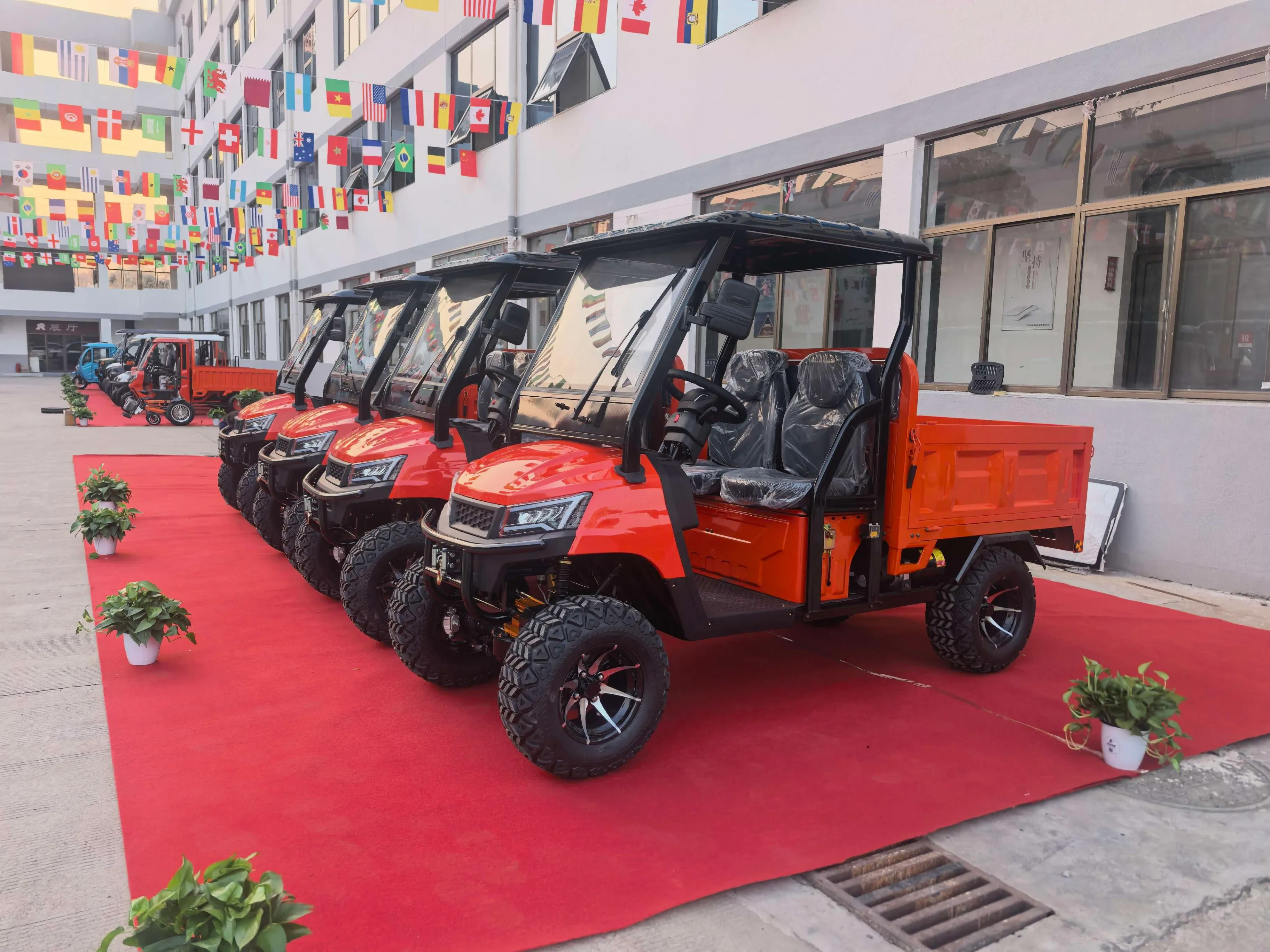
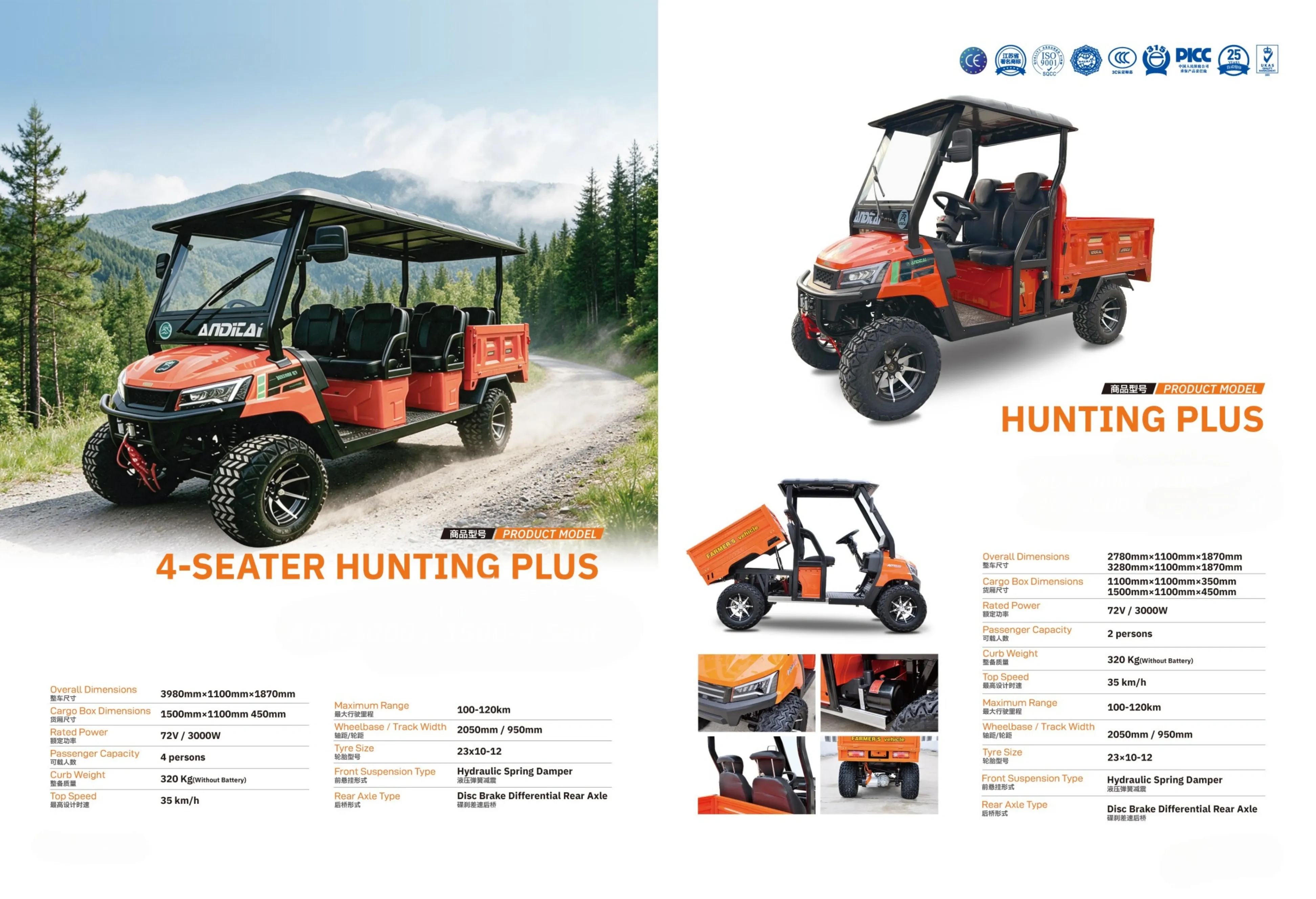
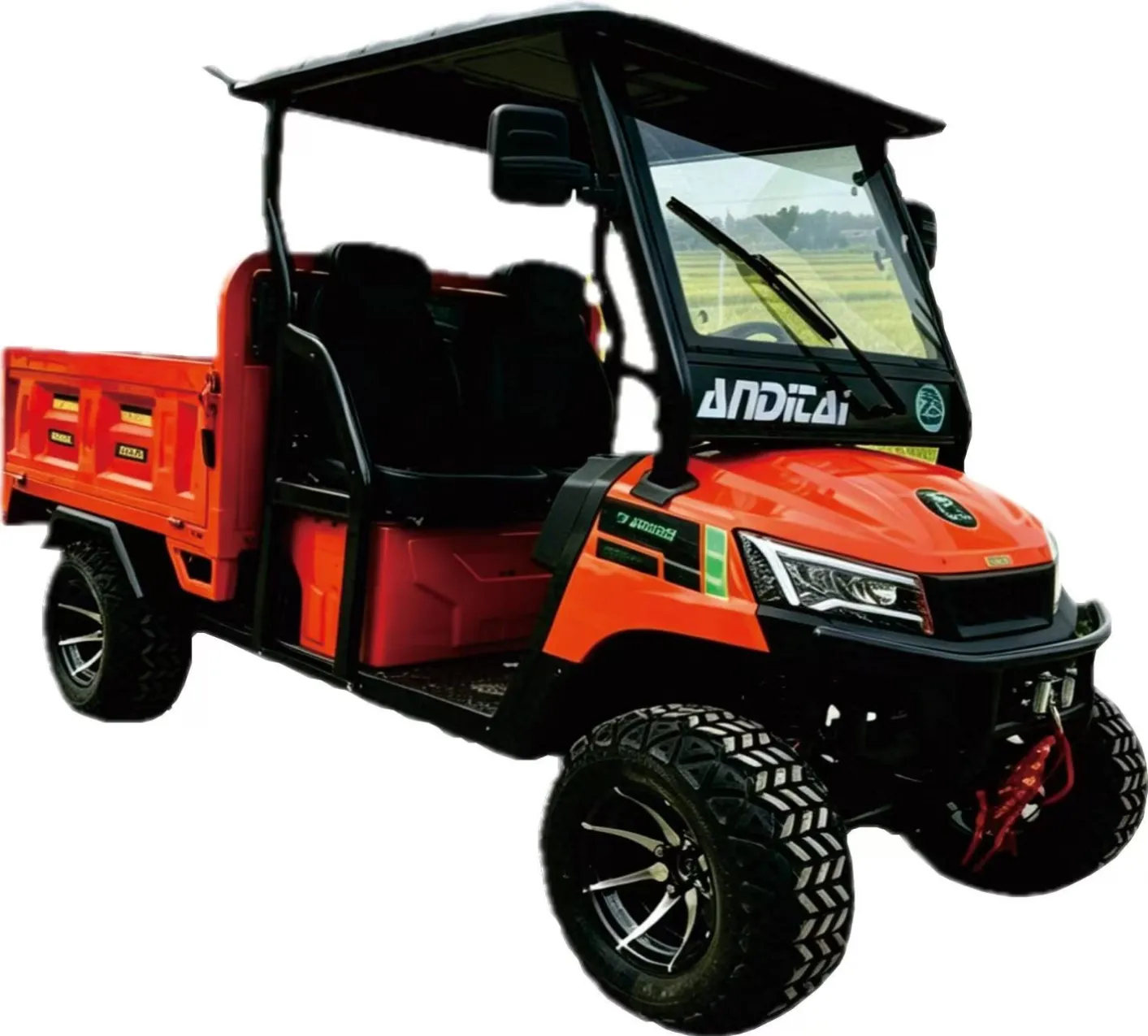
UTVs come with steering wheels, roll‑over protection cages and open cargo beds. They carry multiple operators and heavy cargo. Widely adopted on medium‑and‑large farms, plantations and ranches for daily supply transport and field patrols.
Farm Transport Vehicles
These cargo‑focused farm vehicles are optimized for hauling harvest outputs, fertilizer, feed and farm equipment. Strong chassis and anti‑wear tires adapt to continuous heavy‑load farm logistics.
Typical Real‑World Applications of Farm Vehicles
- Crop farming: soil tillage, sowing, spraying pesticide & fertilizer, harvesting auxiliary transport, grain hauling
- Orchard & vineyard: narrow‑space moving, fruit picking assistance, orchard maintenance, goods distribution inside plantations
- Livestock & ranch: pasture patrolling, feed delivery, livestock monitoring, hay bale transportation
- Mixed‑use farms: multi‑task daily logistics, towing small attachments, emergency field access on rough terrain
Core Performance Features to Evaluate When Choosing Farm Vehicles
- Terrain adaptability: ground clearance, four‑wheel‑drive capability, tire grip for mud, slope and uneven ground
- Load & towing capacity: match payload and towing rating to your regular cargo and attached implements
- Durability: reinforced chassis, corrosion‑resistant coating, heavy‑duty axle components for long‑hour heavy‑use
- Power options: diesel for high torque and continuous heavy work; gasoline for light‑duty flexible use; electric models for low‑noise and zero‑emission orchard / greenhouse environments
- Attachment compatibility: standard hitch and power interfaces so you can mount plows, sprayers, cargo boxes and other accessories
Current Market Trends for Farm Vehicles
Global agriculture keeps raising demands for cost‑effective, multi‑functional farm vehicles. Labor shortages push farmers to replace manual work with mechanized equipment.
- Compact multi‑purpose farm vehicles gain popularity for small‑holder farms and orchards
- Better component reliability and easier‑access spare parts become key requirements for importers and distributors
- More buyers pay attention to emission standards and after‑sales support for long‑term fleet operation
FAQ
Q: What is the difference between ATV and UTV for farm use?
A: ATV (quad bike) uses handlebars, smaller size, better for narrow paths. UTV uses steering wheel, roll cage and bigger cargo box, carries more passengers and heavier loads for regular farm transport work.
Q: Are farm vehicles road‑legal?
A: Most pure farm vehicles are designed for off‑field operation only. Road registration depends on local country regulations. Buyers need to confirm local homologation requirements before purchasing.
Q: Which farm vehicle suits small‑size orchards?
A: Compact tractors or ATVs are preferred, thanks to small turning radius and flexible movement inside narrow tree rows.
Conclusion
Farm vehicles form the mechanical foundation of modern agriculture. Whether you run a family farm, large plantation or act as an agricultural equipment distributor, matching vehicle types, power and load capacity to your actual working scenarios is the key to maximizing return on investment.If you are sourcing reliable farm vehicles, feel free to contact our team for detailed product specifications and project‑oriented solutions.