Sep 21, 2026Buying Guides
Electric UTV vs Gas UTV: Pros & Cons for Farm & Hunting
Electric UTV vs Gas UTV: Pros & Cons for Farm & Hunting
When choosing a utility task vehicle for daily farm work, ranch maintenance, outdoor patrol, or hunting activities, buyers always face a core choice: electric UTV or gas UTV. Both models can handle off-road tasks, cargo hauling, and rough terrain driving, but they differ greatly in operating cost, performance adaptability, maintenance, and field applicability.For global farm owners, hunting club operators, resort managers, and regional distributors, understanding their pros and cons helps pick the most cost-effective long-term work vehicle. This article makes a detailed comparison based on real farm and hunting usage scenarios.
1. Electric UTV: Pros & Cons for Farm & Hunting
Pros of Electric UTV
Lower daily operating cost
Electric UTVs rely on electric power instead of gasoline. For daily short-distance farm patrol, feed transportation, and hunting ground inspection, the electricity cost is only a fraction of fuel cost. Long-term use can save thousands of dollars in energy expenses every year, ideal for frequent daily operation.Silent & eco-friendly performance
Different from gas engines, electric UTVs produce almost no noise and zero exhaust emissions. For hunting scenarios, the quiet running will not scare away wild animals, greatly improving hunting success rates. For farms and residential ranches, low noise avoids disturbing livestock and neighboring residents, perfectly fitting enclosed and suburban farm environments.Instant torque & stable off-road power
Electric motors output full torque instantly at start-up, providing stronger climbing ability and better mud road passing performance. When carrying heavy cargo, crossing rugged terrain or climbing steep slopes, electric UTVs deliver more stable and linear power without stalling, fully meeting farm hauling and outdoor off-road demands.Minimal maintenance & high durability
Electric UTVs have no complex engine components, oil circuits, spark plugs or exhaust systems. They do not need regular oil changes, filter replacement or engine maintenance. The simple structure greatly reduces failure rates and downtime, cutting long-term maintenance labor and parts costs for users.
Cons of Electric UTV
Limited driving range & charging dependence
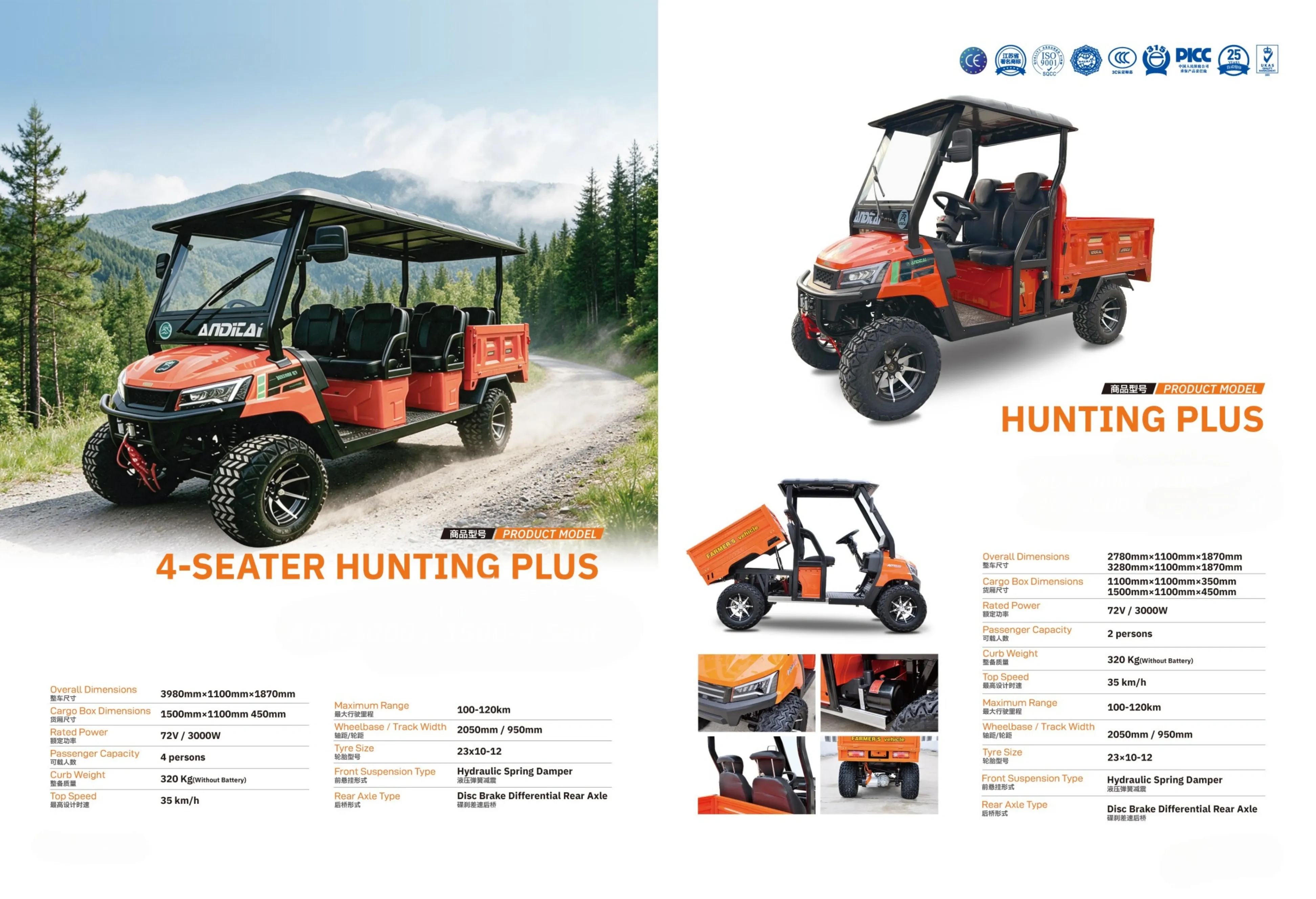
Most mainstream electric farm UTVs support 100–120km range per full charge, which fully covers daily farm and hunting short-distance work. However, for ultra-long-distance continuous cross-country travel without charging conditions, electric models are less flexible than gas UTVs.Longer energy replenishment time
Charging takes several hours, while refueling only takes a few minutes. It is the main limitation for users who need non-stop all-day continuous operation.
2. Gas UTV: Pros & Cons for Farm & Hunting
Pros of Gas UTV
Unlimited cruising flexibility
Gas UTVs have no range anxiety. As long as fuel is available, they can work continuously for a whole day, making them more suitable for large-area wild hunting grounds, remote pastures and long-distance cross-region patrol tasks.Strong extreme environment adaptability
Fuel engines have stable performance in extreme high and low temperatures, with no battery attenuation problem. They are more reliable for all-weather outdoor work in harsh wild environments.
Cons of Gas UTV
High operating & maintenance costs
Long-term fuel consumption brings high daily operation expenses. Meanwhile, gas UTVs require regular engine maintenance, oil replacement and parts inspection, with higher failure rates and later maintenance costs.Loud noise & exhaust pollution
Engine running noise is loud, which easily disturbs livestock on farms and drives away wild animals on hunting grounds, greatly affecting the concealment effect of hunting activities. In addition, exhaust emissions are not eco-friendly and cannot meet the environmental protection requirements of many resorts and scenic ranches.Delayed power output
Gas engines need speed-up response, with insufficient instantaneous torque. The performance is weaker than electric UTVs when starting with heavy loads or climbing steep slopes.
3. Scenario-Based Selection Guide: Which One Is Better?
Choose Electric UTV if you have:
- Small and medium-sized farms, fixed-range daily operation
- Hunting grounds that require quiet concealment
- Resorts, villas and scenic spots with environmental and noise restrictions
- Demand for low daily cost and low maintenance
Choose Gas UTV if you have:
- Large wild pastures and ultra-long-distance patrol work
- Non-stop all-day continuous operation requirements
- No stable charging conditions in working areas
4. Final Verdict for 2026 Farm & Hunting Users
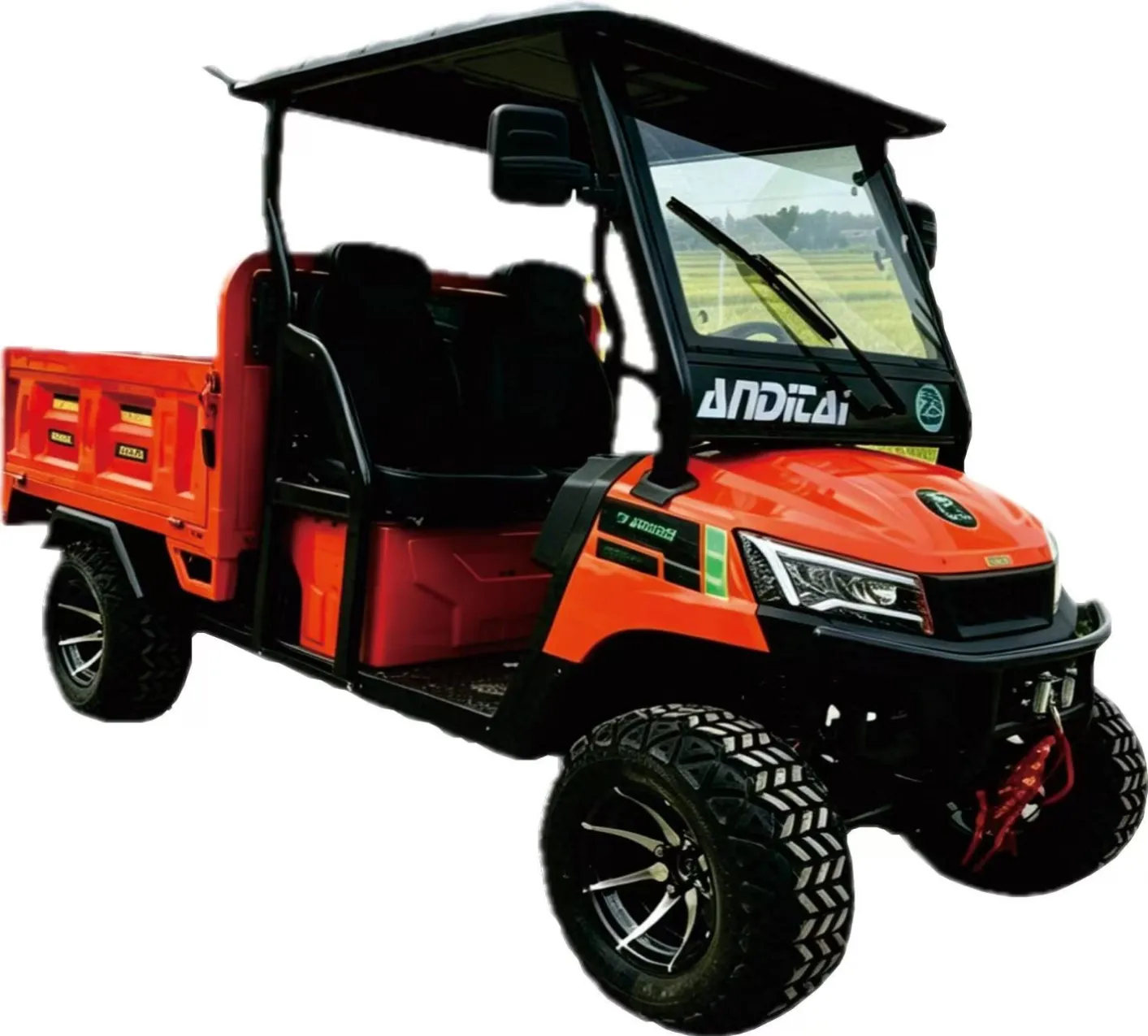
With the upgrading of battery technology and stricter global environmental policies, electric UTVs have become the mainstream choice for most farm, ranch and hunting ground users. It balances power performance, quiet operation, low cost and zero emission, and is more in line with long-term business operation needs.As a professional electric UTV factory, we provide 72V 3000W heavy-duty electric farm UTVs with CE certification, 100–120km long range, hydraulic tipping cargo box and complete off-road configurations. We support OEM/ODM customization for global distributors and buyers.Contact us to get the latest electric UTV catalog and factory wholesale price.