Jul 31, 2026how
How to choose ATV tires for heavy load

How to Choose ATV Tires for Heavy Load: A Complete Buyer’s Guide
If you use your ATV for farming, construction work, towing trailers, or hauling heavy cargo, standard recreational ATV tires will not cut it. Heavy-load ATV operation demands stronger tire construction, higher weight capacity, better stability, and outstanding puncture resistance. Choosing the wrong tires leads to tire bulging, sidewall cracking, poor traction, and even safety hazards during heavy-duty tasks.In this guide, we will break down how to choose ATV tires for heavy load step by step, covering ply rating, load capacity, tread design, size matching, terrain adaptation, and professional installation tips. This article helps buyers, wholesalers, and ATV owners select durable, cost-effective heavy-load ATV tires for long-term working use.
1. Understand ATV Tire Load Capacity Basics
The core standard for heavy-load ATV tires is load-bearing performance. Many users only focus on tire appearance but ignore the actual weight limit, which causes premature tire failure under heavy cargo or towing conditions.
1.1 Load Index and Maximum Weight Rating
Every ATV tire is marked with a clear load index on the sidewall, representing the maximum weight a single tire can support. For heavy-load work scenarios, you must calculate the total weight including the ATV body, rider, cargo, and towing load.Professional heavy-duty ATV tires are designed with reinforced rubber layers and upgraded cord structures to distribute weight evenly. Avoid using light recreational tires for continuous heavy-load work, as they cannot withstand long-term pressure and heat accumulation.
1.2 Ply Rating (PR) Is the Key to Heavy-Load Performance
Ply rating determines the overall strength, durability, and puncture resistance of ATV tires, which is the most critical indicator for heavy-load selection.
- 4-Ply Tires: Suitable for light daily recreation, flat ground cruising, and zero-load driving. Not recommended for any heavy hauling or rugged working conditions.
- 6-Ply Tires: The most popular choice for heavy-load ATV use. Balances load capacity, wear resistance, and cost. Perfect for farm work, light towing, and daily cargo transportation.
- 8-Ply & Higher Tires: Ultra-heavy duty tires for construction sites, mountainous areas, and continuous overloading scenarios. Features thicker sidewalls, anti-burst performance, and stronger impact resistance.
For commercial and industrial heavy-load applications, 6-ply or 8-ply ATV tires are always the priority choice.
2. Choose Tread Pattern According to Working Terrain
Heavy-load driving changes tire grounding pressure. A wrong tread pattern will cause skidding, uneven wear, and reduced load stability. You need to match the tread based on your main working environment.
2.1 Hard Ground & Paved Roads
For cement roads, asphalt roads, and hard flat ground, choose all-terrain (AT) compact tread patterns. The dense tread design increases the contact area with the ground, improves load-bearing stability, and reduces rapid wear during long-distance heavy-load driving.
2.2 Muddy & Wet Farmland
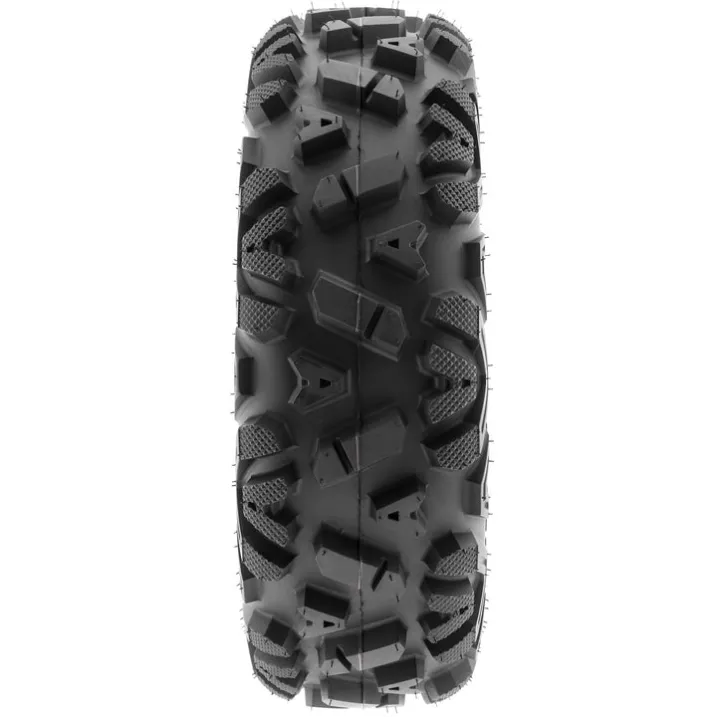
Mud terrain requires deep, self-cleaning lugs. Heavy-load mud ATV tires adopt spaced deep treads to discharge mud quickly, prevent tire trapping, and maintain stable traction even with full cargo loads. Closed and dense treads are not suitable for muddy heavy-load scenarios.
2.3 Rocky & Gravel Construction Sites
Rocky terrain needs reinforced tread blocks and anti-cut rubber formula. Heavy-load ATV tires for construction sites feature thickened tread surfaces and anti-puncture layers, effectively avoiding tire damage caused by sharp stones during heavy-load operation.
3. Correct Tire Size Matching Avoids Overload Risk
Many customers upgrade heavy-load tires blindly without considering rim and vehicle matching, resulting in poor handling and hidden safety risks.Always follow the original tire size standard of your ATV. Common ATV tire size formats are 25x8-12, 26x10-14, 27x9-14 and other standard specifications. The three sets of data represent tire height, width, and rim diameter respectively.For heavy-load modification, you can appropriately choose tires with a wider grounding width within the compatible size range. Wider tires provide more uniform pressure distribution and better stability under heavy cargo, but do not exceed the vehicle’s limit size to avoid friction with the vehicle body.
4. Sidewall Strength Determines Heavy-Duty Durability
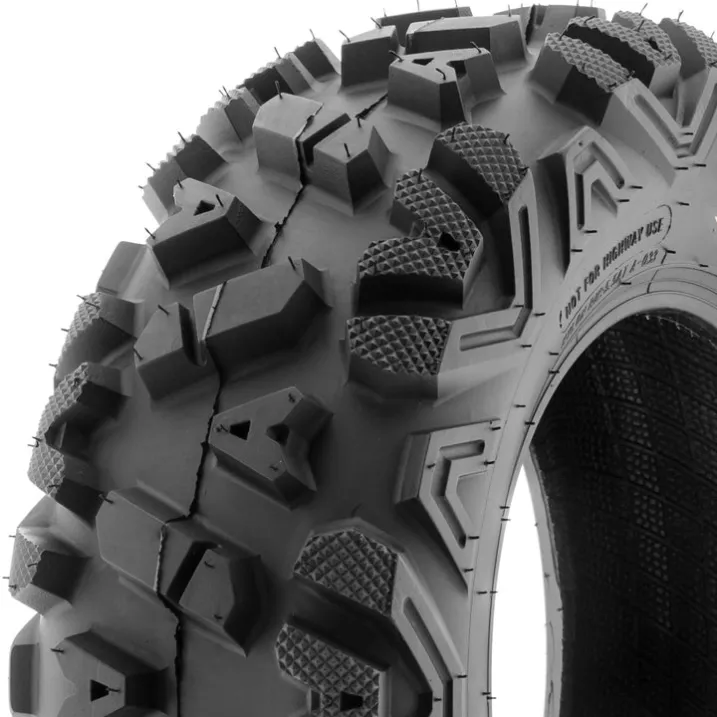
The sidewall is the weakest part of ATV tires, especially under heavy load. Ordinary thin sidewalls are prone to bulge, deformation, or even blowout when bearing excessive weight.Professional heavy-load ATV tires adopt thickened sidewall reinforcement technology with high-tensile nylon cord layers. This design effectively resists vertical pressure and lateral torsion, maintains tire shape stability during long-term heavy-load climbing, crossing obstacles, and towing work, and greatly extends tire service life.
5. Inflation Pressure Standard for Heavy-Load Use
Even if you buy high-load tires, incorrect air pressure will cause poor load performance. Too low pressure leads to tire collapse and excessive extrusion wear; too high pressure reduces traction and causes bumpy driving.For heavy-load cargo and towing work, slightly increase the air pressure appropriately according to the tire manual to enhance overall support performance. For complex off-road terrains, keep standard air pressure to balance load capacity and shock absorption performance.
6. Common Mistakes When Buying Heavy-Load ATV Tires
- Only looking at price: Low-cost 4-ply thin tires cannot support long-term heavy work, resulting in frequent replacement and higher comprehensive cost.
- Blindly pursuing large size: Mismatched tire sizes affect ATV suspension balance and reduce heavy-load safety.
- Ignoring terrain adaptability: Heavy-load tires without targeted tread design will skid severely in complex terrain and cannot exert load performance.
- Mixed old and new tires: Different wear degrees lead to inconsistent load-bearing balance, causing vehicle deviation and safety risks.
7. Final Buying Suggestions
If your ATV is mainly used for farm transportation, yard work, light towing, and daily heavy cargo, 6-ply all-terrain heavy-load ATV tires are the most cost-effective solution. For industrial construction, mountain transportation, and long-term high-load operation, choose 8-ply reinforced heavy-duty tires to obtain maximum durability and safety.High-quality heavy-load ATV tires should feature strong load capacity, anti-puncture performance, wear resistance, and terrain adaptability. Reasonable matching according to actual usage scenarios can maximize tire service life and improve overall ATV working efficiency.
Conclusion
Choosing reliable ATV tires for heavy load is not only about improving driving experience but also ensuring long-term working safety. Focus on ply rating, load index, tread pattern, sidewall strength, and size matching, instead of simply judging by appearance.Whether you are a retail user or a bulk wholesaler, selecting standard heavy-load ATV tires can reduce replacement frequency, lower maintenance costs, and adapt to various harsh working environments.